
Progrogramming
Basics
First see the programming journey roadmap and milestones
Ever think why computers were invented?
First see the programming journey roadmap and milestones
First see the programming journey roadmap and milestones
Have You Ever Wondered Why Computers Were Invented?
🌟 Why This Matters
Every day we use computers to learn 📚, communicate 💬, work 💼, create 🎨, and solve problems 🧩.
But have you ever wondered  why computers were invented in the first place?
The story of computers did not begin with screens  , keyboards
  , or the internet
  .
.
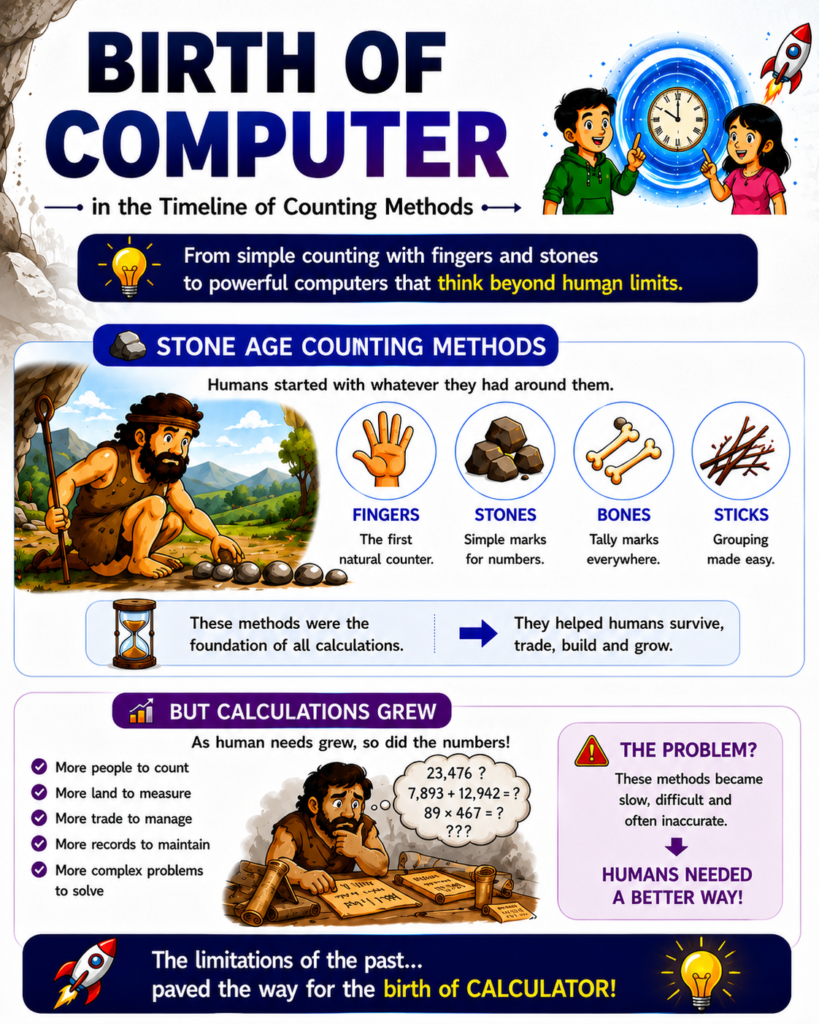
It began thousands of years ago  when humans simply needed a better way to count
  and manage numbers
  .
.
In the early days  , people used their fingers
  , stones , sticks
  , and other simple objects to keep track of quantities.
These methods worked well for small tasks  , but as civilizations grew
  , calculations became larger
  and more complicated.
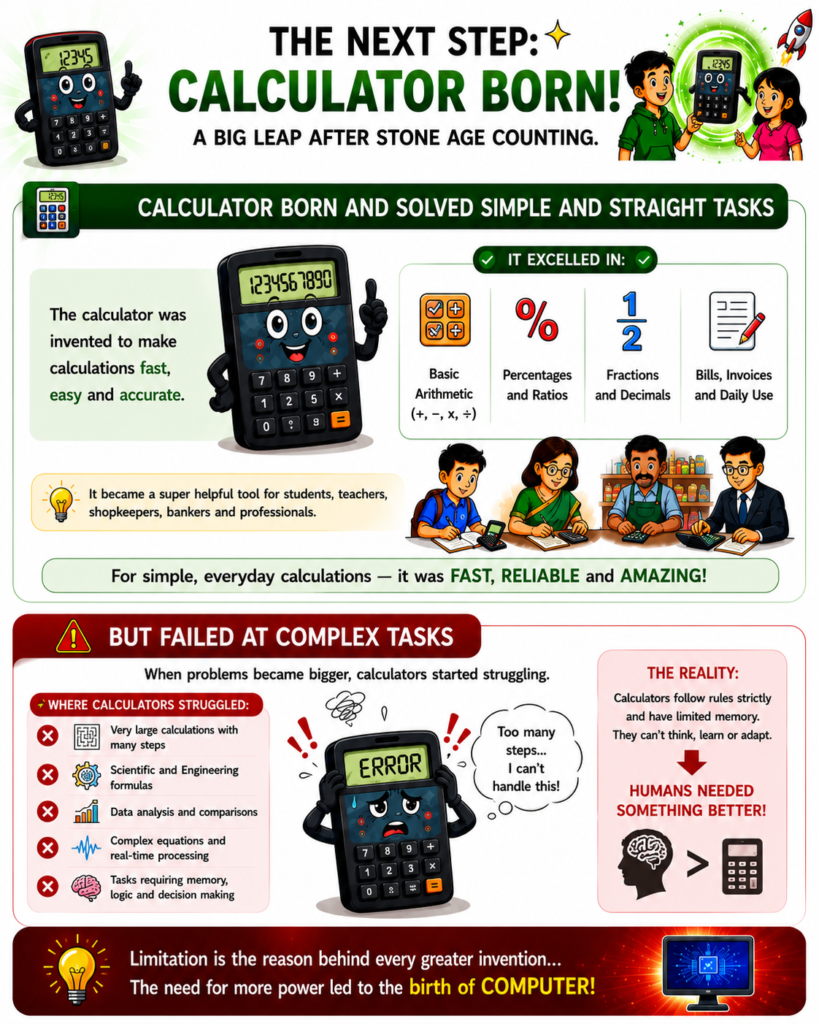
To solve this challenge  , humans invented calculators
  .
.
Calculators made arithmetic faster  , easier
  , and more accurate
  .
.
However, they could only perform predefined calculations and struggled whenever problems became too complex  .
.
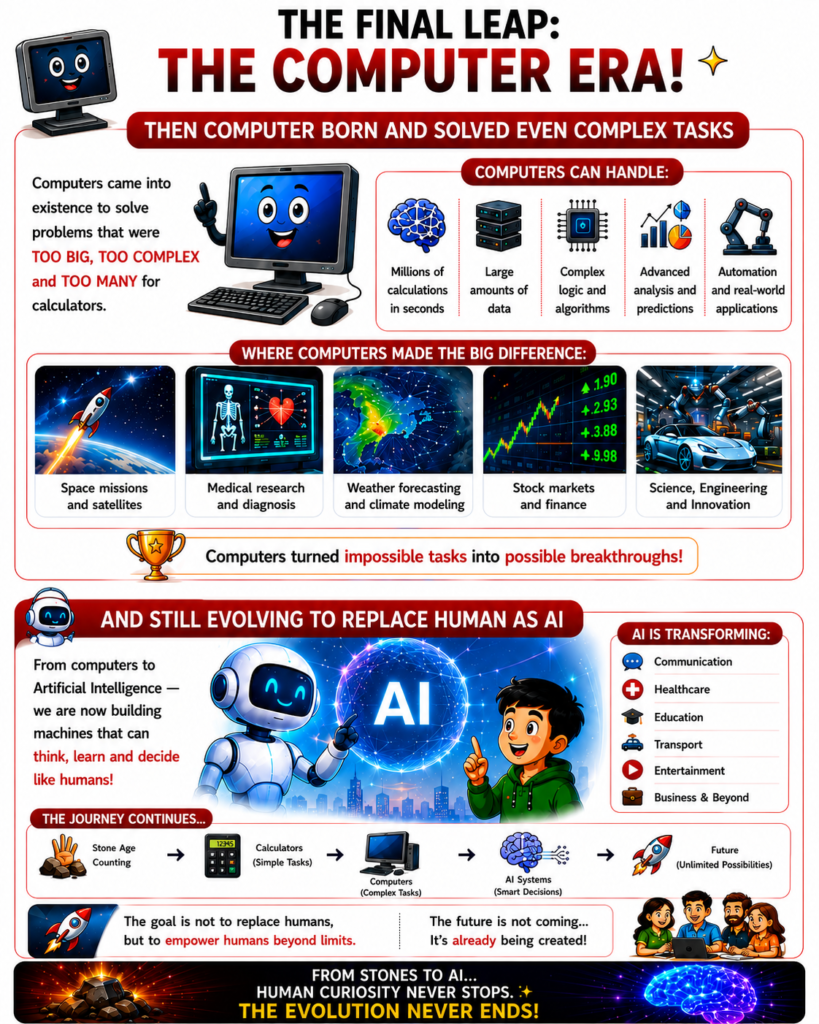
The next great leap  was the invention of computers
  .
.
Unlike calculators, computers could store information  , process huge amounts of data , follow complex instructions
  , and solve problems
  that were impossible to handle manually.
Today, computers continue to evolve into intelligent systems powered by Artificial Intelligence  .
.
From simple stone counting methods to modern AI , the journey reflects one timeless human trait:
 The desire to solve bigger problems more efficient
Remember Forever ❤️
Computers were invented because human problems grew faster than human calculations .
Stone Counting → Calculator → Computer → AI
Every step was created to solve bigger challenges than the previous generation could handl